




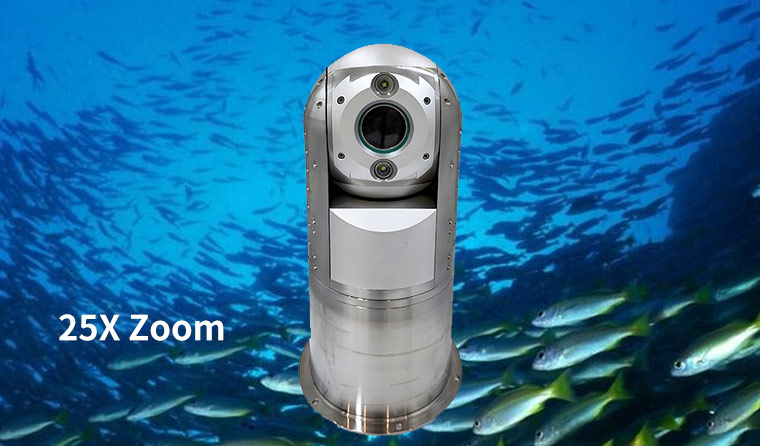
The core challenge of underwater 25x zoom technology lies in solving three major problems caused by light scattering, pressure changes, and water turbidity in underwater environments: "zoom defocus," "image quality degradation," and "insufficient stability." Currently, the industry has formed a three-in-one architecture of "optical zoom module + anti-shake drive technology + anti-interference imaging algorithm," achieving clear, stable, and precise imaging under high-magnification zoom.
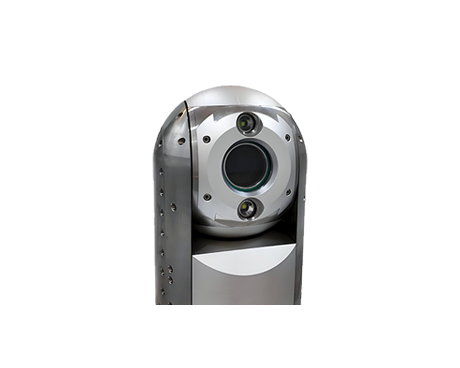
To cope with the strong scattering environment underwater, 25x zoom cameras generally integrate multi-polarization information fusion technology. By collecting linear polarization and circular polarization laser signals, it filters out backscattering interference from suspended particles. Meanwhile, it uses the MPFNet multi-branch fusion network to optimize image reconstruction quality, maintaining more than 70% zoom clarity in turbid water. In terms of hardware protection, the equipment adopts an IP68 corrosion-resistant sealing design, equipped with a special aluminum alloy shell and pressure-resistant window glass. It can work stably in a 50-meter water depth environment and adapt to an extreme temperature range of -30℃ to 60℃, fully matching the harsh requirements of different aquaculture scenarios such as seawater and freshwater.
For more information about underwater aquaculture camera, please visit the homepage.



