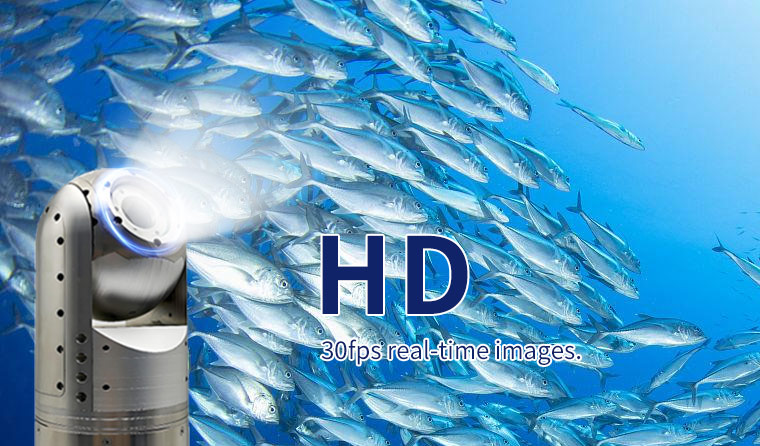
In the digital transformation of smart fisheries, the "high-definition (HD) resolution" and "real-time image transmission" technologies of underwater aquaculture cameras are key to breaking the information barriers of traditional aquaculture. The former solves the perception problem of "being unable to see clearly or distinguish details" in underwater environments, while the latter realizes a management closed-loop of "long-distance and low-latency" communication. Together, they enable farmers to shift from "experience-based judgment" to "data-driven decision-making," providing core technical support for precision aquaculture, risk early warning, and efficiency improvement. From shallow coastal ponds to deep-sea cages, and from clear water to turbid water aquaculture, the continuous breakthroughs in HD and real-time technologies are redefining the boundaries of visual management in underwater aquaculture.
I. HD Resolution Technology: The "Ultra-HD Eye" Penetrating Underwater Environments
The core of underwater aquaculture cameras' HD imaging capability lies in overcoming multiple interferences such as water scattering, low light, and turbidity, enabling visual perception with distinguishable details and extractable features. At the hardware level, the industry has formed a technical architecture of "high-pixel sensors + anti-interference optical design + intelligent algorithm enhancement," promoting the leap of imaging precision from "seeing outlines" to "identifying details."
Mainstream high-end models generally adopt professional CMOS sensors with more than 12 million pixels, such as Sony IMX226 and IMX586. Combined with large-aperture lenses and infrared fill light modules, they can still output 1080P/4K ultra-HD images in low-light environments at 5-10 meters depth, and even clearly capture micro-features such as fish body markings and shrimp appendage states. More groundbreaking is the "Underwater Eagle Eye" developed by Chongqing Zhongke Yaolu Chuan Technology Co., Ltd., whose imaging precision reaches 5.86 microns (about 1/12 the diameter of a human hair) with a maximum detection distance of 200 meters. Even in turbid waters, its imaging distance is 5-6 times that of ordinary equipment, completely solving the industry pain point of "short visible distance" in high-turbidity environments. For turbid sea areas such as Zhoushan, Yuanshi Technology's new-generation turbid water camera uses AI de-turbidity algorithms to real-time restore clear images even when water visibility is less than 0.5 meters, doubling the effective visible distance compared to conventional equipment and allowing farmers to clearly grasp fish school activities and growth status.
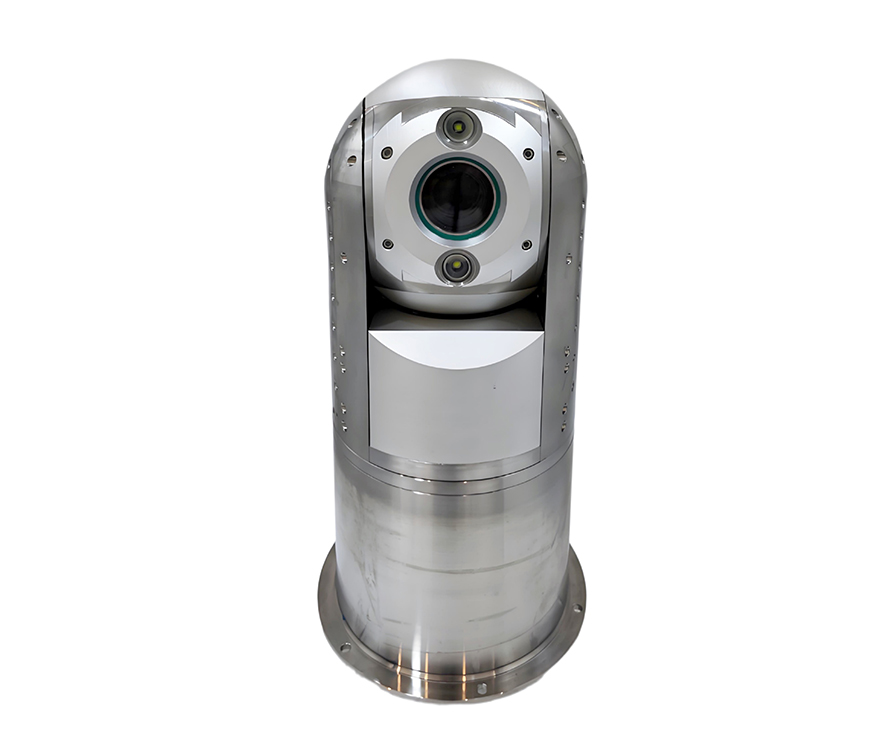
In resolution application scenarios, HD image quality provides a precise data foundation for AI recognition. At 4K resolution, devices can accurately count fish schools, analyze feeding intensity, and even identify growth indicators such as body length and weight through deep learning models like YOLO, with an accuracy rate exceeding 90%. For example, in the smart fish farm in Chongming, Shanghai, underwater 4K cameras combined with AI algorithms can distinguish between different states of fish (healthy, hungry, sick), providing a visual basis for precision feeding and disease early warning, reducing feed costs by 12% and increasing yield by 15%. In the cultivation of special species such as sea cucumbers and Chinese giant salamanders, HD images can record individual growth trajectories, offering irreplaceable visual data for variety traceability and quality control.
II. Real-Time Image Transmission: Building a "Underwater Communication Link" with No Delay
The core goal of real-time image transmission is to achieve low-latency and high-stability transmission of "underwater data - cloud platform - terminal equipment," solving the management problem of "being able to see but not keep up" in long-distance aquaculture. This technological breakthrough benefits from the multi-dimensional collaboration of "codec optimization + network architecture upgrade + transmission protocol innovation," reducing the delay from underwater image collection to presentation to milliseconds or seconds, meeting the real-time monitoring needs of different aquaculture scenarios.
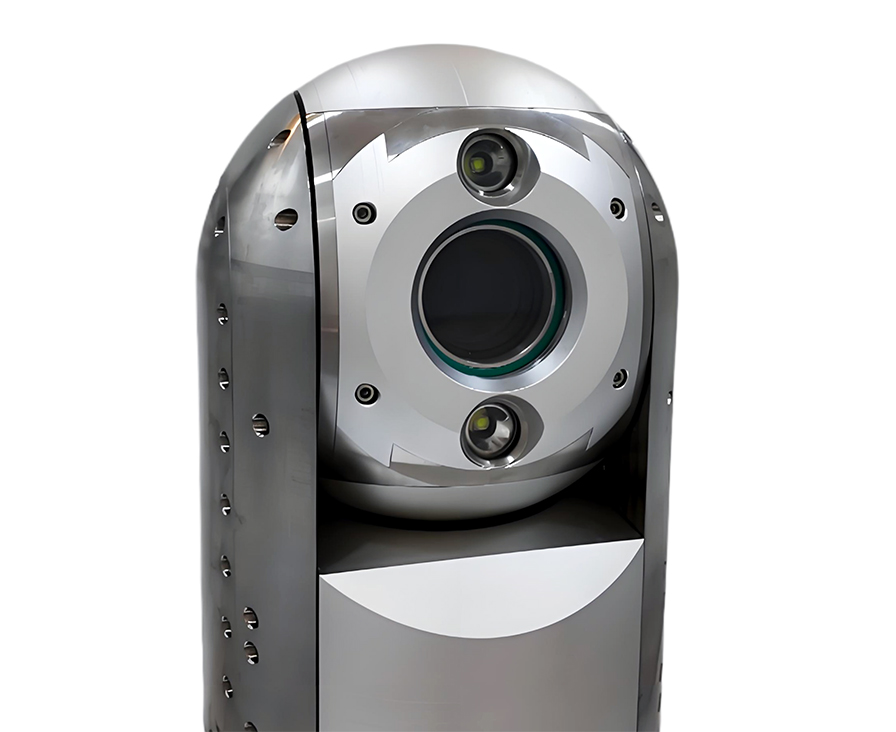
In terms of codec technology, the industry is upgrading from H.265 to the new-generation H.266/VVC standard. The latter can reduce data volume by 50% while ensuring the same image quality, significantly reducing transmission bandwidth occupation. H.266 optimizes the compression efficiency of large-resolution videos through technologies such as Quadtree plus Multi-Type Tree (QT+MTT) partitioning and dual-tree coding for chrominance components. Combined with hardware acceleration (GPU/specialized chips), it can achieve real-time encoding and transmission of 4K 60fps HD videos, reducing stutter rate by more than 50%. Currently, the penetration rate of H.266 in leading video platforms has exceeded 70%, providing mature technical support for HD real-time transmission of underwater aquaculture cameras.
At the network transmission level, the integrated application of 5G, NB-IoT, and satellite communication has built a full-coverage transmission network for "coastal - offshore - remote areas." In the national-level marine ranch project, China Unicom Qingdao Branch adopted a multi-frequency coordinated network of "900MHz+2.1GHz+3.5GHz" combined with "5G+satellite+submarine cable" backhaul methods, achieving high-speed transmission within a 97-kilometer offshore range. Real-time images from underwater cameras can be transmitted to the control hall 55 kilometers away without delay, synchronously displaying fish school dynamics and water quality parameters. China Mobile IoT's "5G base station + CPE + dedicated line" solution for Zhuhai's marine ranch controls transmission delay to milliseconds, ensuring stable communication in harsh environments such as frequent typhoons. For remote areas without network coverage, devices can link with 4G full-network connectivity and portable routers, or use Multi-Access Edge Computing (MEC) nodes for local real-time data processing and early warning. The MEC deployment in Chongming's fish farm reduces the response delay of water quality regulation commands to less than 10 milliseconds, avoiding risks caused by network lag.
III. Synergistic Technology Application: Reshaping the Efficiency Revolution of Aquaculture Management
The synergy between HD resolution and real-time transmission technologies not only meets the basic needs of "seeing clearly and transmitting quickly" but also promotes the transformation of aquaculture management towards "precision, unmanned operation, and high efficiency," showing significant application value in various scenarios.
In deep-sea cage aquaculture, the marine ranch of Qingdao Guoxin Group links underwater HD cameras with intelligent feeding systems through a 5G three-dimensional observation network. Fish density data from real-time images can dynamically adjust feeding amounts, increasing feed conversion rate by more than 30% while reducing water pollution. In the freshwater aquaculture base of Dongping Lake, 32 underwater HD cameras transmit real-time images to farmers' mobile apps via 5G networks. Combined with water quality sensor data, they realize dual monitoring of "images + data," enabling one farmer to manage 30 mu of fish ponds, reducing labor costs by more than 60% and ammonia nitrogen content by 40% year-on-year. In turbid water aquaculture scenarios, the combination of Yuanshi Technology's turbid water cameras and real-time transmission technology allows farmers to clearly observe underwater fish activities on shore, completely replacing the traditional mode of "sampling by boat and observing by catching fish," and improving operation efficiency by more than 5 times.
From the perspective of technological development trends, HD resolution is evolving towards 8K and 3D imaging, while real-time transmission is upgrading to "space-air-ground-sea integrated" coverage. In the future, combined with AI large models and digital twin technology, underwater aquaculture cameras will realize a full-link closed loop of "HD images - data extraction - intelligent decision-making - automatic execution." For example, early disease characteristics can be accurately identified through 8K HD images, and real-time transmission can link with aerators and drug delivery equipment to achieve second-level responses, injecting stronger technological momentum into the sustainable development of aquaculture.
For more information about underwater aquaculture camera, please visit the homepage.