How industrial cameras work in the deep sea
Hits: 1489 Time: April 14,2026
How do underwater industrial cameras survive in "forbidden zones"?
On land, taking a picture is as simple as pressing the shutter. But capturing clear images in the dark, high-pressure, and corrosive deep sea is nothing short of an "engineering marvel." The Underwater Industrial Camera is far more than just putting a waterproof case on an ordinary camera; it's a "super retina" for deep-sea exploration, energy development, and modern fisheries.
I. The Magic of Optics: Reclaiming Colors "Stolen" by Water
If you cut an apple underwater, you'll be surprised to find it's green. This is because water has a very strong absorption effect on light waves.
-
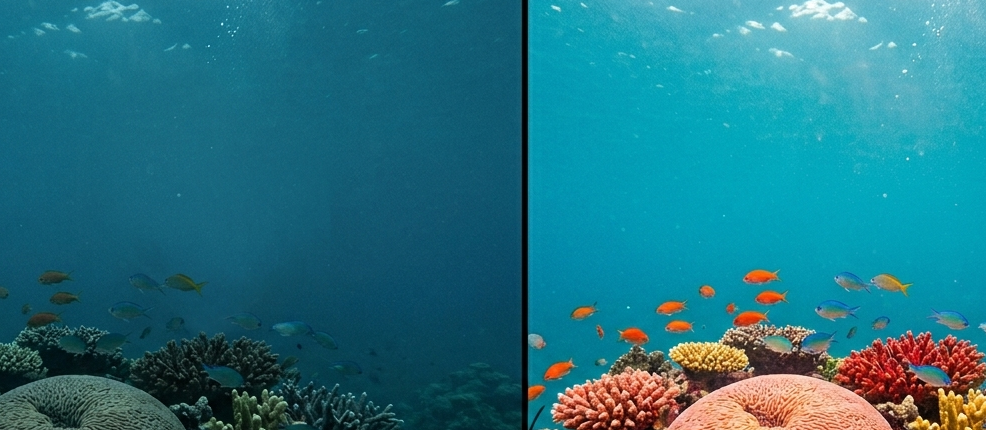
The Disappearing Red: Water molecules absorb long-wavelength red light most quickly, typically disappearing completely at a depth of 5 meters. This is why unfiltered underwater photos always appear grayish-blue-green. Industrial cameras use special CC (color compensation) filters or built-in white balance algorithms to forcibly recover the "lost red" at the hardware level.
-
The "Nearsightedness" Caused by Refraction: Water has a refractive index of approximately 1.33, while air is 1. Light is deflected when entering the camera's air chamber from water, resulting in a narrowed field of view and image distortion. High-end underwater cameras typically use a dome port, which acts like a pair of specially designed glasses to counteract the magnification effect of refraction and restore the true field of view.
II. Mechanical Armor: Withstanding the Pressure of "An Elephant Stepping on a Fingernail"
For every 10 meters increase in water depth, the pressure increases by one atmosphere. In the Mariana Trench, a camera has to withstand the immense pressure equivalent to an elephant standing on your fingernail.
-
Housing Material: Shallow-water cameras typically use anodized aluminum, while deep-sea cameras must utilize titanium alloys. This metal is not only extremely strong but also perfectly resistant to the electrochemical corrosion of seawater.
III. AI Intelligence: From "Seeing Clearly" to "Understanding"
Modern underwater industrial cameras are no longer just recorders; they're more like robots with brains.
-
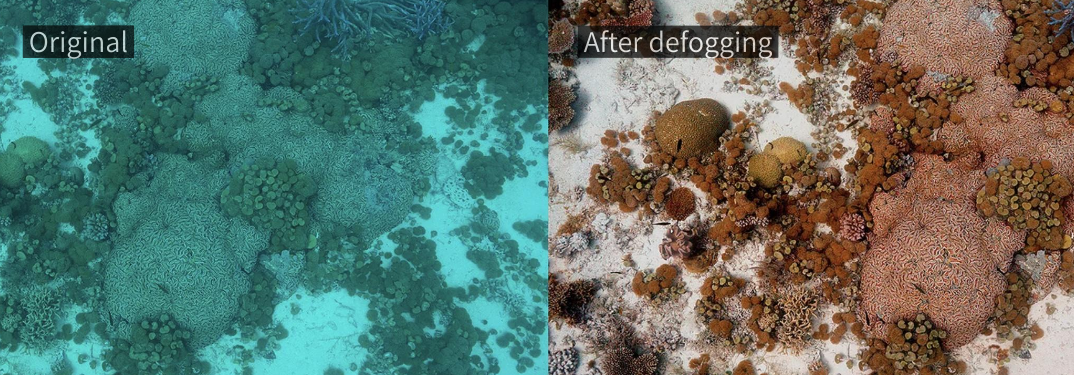
Dehazing Algorithm: Addressing the "backscattering" caused by underwater suspended particles (similar to driving with high beams in fog), the camera's built-in AI chip can remove image impurities in real time, clearing away the fog and revealing the clear sky.
-
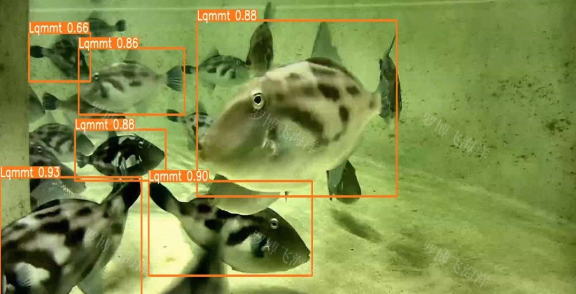
Biometric Recognition: In intelligent marine ranches, the camera can automatically identify each salmon. It can not only count them but also visually analyze the fish's feeding desires, thereby precisely controlling the feeding machine and achieving unmanned aquaculture.
 From safeguarding the water pools of nuclear power plants to searching for resources in mineral deposits thousands of meters deep, underwater industrial cameras are replacing human eyes, venturing into forbidden zones inaccessible to the naked eye. They are not merely a collection of sophisticated instruments, but also the vanguard in humanity's exploration of blue-water civilization.
If you are interested in underwater cameras, please feel free to contact me!
CONTACT ME:
Nora Nan
Emai:sales04@granfoo-cn.com
Tel:+86 18192979488
Click the link to contact me.(https://web.whatsapp.com/send?phone=8618192979488)